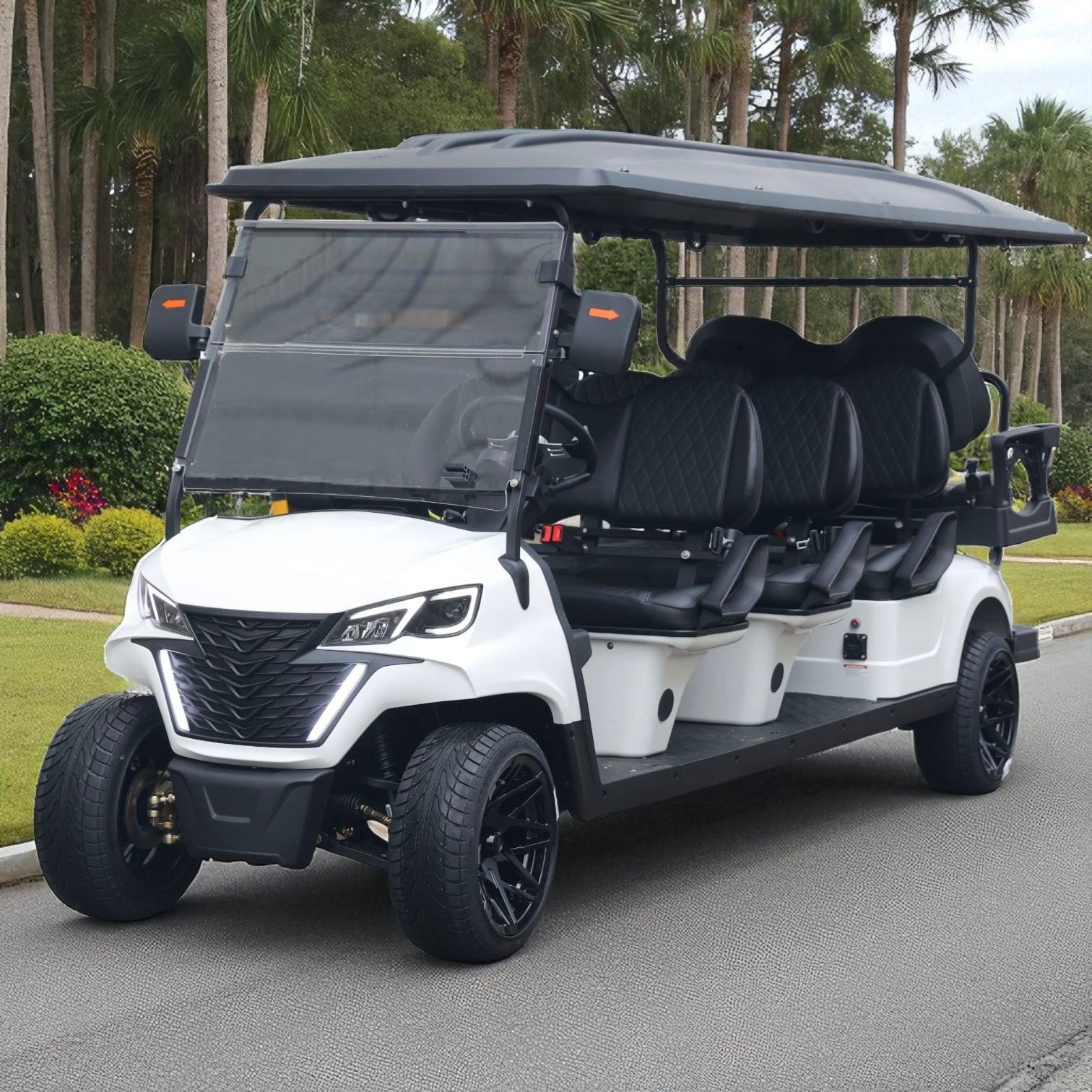
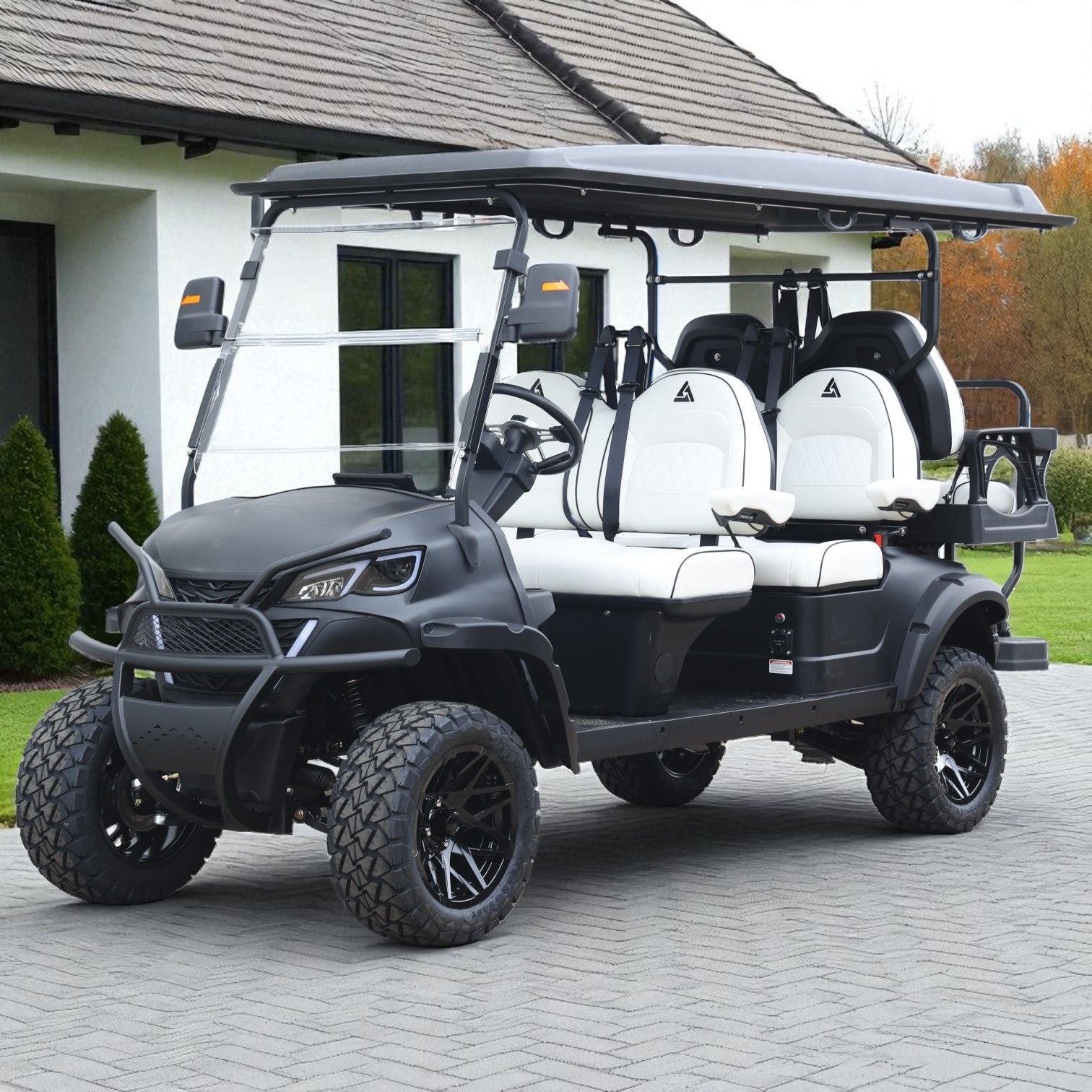
An LSV, or Low-Speed Vehicle, is defined by federal law as a street-legal vehicle that travels between 20 and 25 miles per hour. An NEV, or Neighborhood Electric Vehicle, is a subset of LSVs that run only on battery power.
So, while every NEV qualifies as an LSV, not all LSVs are NEVs,some still use gasoline. This difference matters because it influences where you can drive these vehicles, how you might use them, and their impact on the environment.
Keep reading to understand these distinctions better and find out which vehicle suits your community, campus, or business needs.
Key Takeaways
-
LSVs are the broad category, while NEVs are a specific, electric-only type of LSV.
-
The power source is the main differentiator, with NEVs offering zero emissions.
-
Your intended use and local regulations are the most important factors in choosing between them.
What are LSVs and NEVs, and Why Does the Distinction Matter?
A Low-Speed Vehicle, or LSV, is a category set by the National Highway Traffic Safety Administration (NHTSA). These vehicles are built to travel faster than 20 miles per hour but no more than 25 miles per hour.
To be allowed on the road, they must stick to streets where the speed limit is 35 mph or less. You won’t find them on highways or freeways because they aren’t designed for those speeds.
The LSV category includes several types of vehicles, all sharing these speed and road-use rules.
Now, a Neighborhood Electric Vehicle, or NEV, fits right inside that LSV group. The key difference? NEVs run only on electricity. They’re made for quiet, clean rides in small areas like neighborhoods, resorts, or college campuses.
The name itself hints at their purpose,short trips in places where low noise and zero emissions matter. This distinction is important when you’re deciding what to buy. If you want a vehicle that uses gas for longer trips or specific jobs, you’d pick an LSV that isn’t an NEV.
But if your focus is on eco-friendly travel for short distances, an NEV is the way to go.
Knowing the difference between LSVs and NEVs helps you follow the rules and make smart choices.
In Indonesia, a 2024 national survey found that around 7% of consumers already own an electric vehicle, while nearly 78% are considering buying one [2], reflecting rising interest in electric mobility similar to NEVs.
It means you can find a vehicle that fits your needs and matches any local environmental goals. Plus, understanding these terms makes it easier to read specs and regulations without confusion.
Whether you’re managing a campus fleet or looking for a neighborhood runabout, this knowledge sets you up for success.
LSV vs. NEV: A Detailed Comparison

Power Source: Electric vs. Electric or Gas
The biggest difference between Neighborhood Electric Vehicles (NEVs) and Low-Speed Vehicles (LSVs) lies in what powers them. NEVs run only on batteries,usually lithium-ion or lead-acid types.
Because they don’t burn fuel, they produce zero emissions. Charging them is simple: just plug into a regular electrical outlet or a special charging station. This makes NEVs quiet and clean, perfect for places where noise and pollution are concerns.
LSVs cover a wider range of options. Some are electric like NEVs, but others use small gasoline engines.
This gives them more flexibility, especially for people comparing them with new golf carts like the ones showcased in the latest new golf carts collection.
If you're leaning toward cleaner power with modern performance, exploring lithium golf cart options can help you understand how upgraded battery tech impacts range and daily usability. especially for people comparing them with new golf carts like the ones showcased in the latest new golf carts collection.
Gas-powered LSVs don’t need to be recharged, which can be handy if you don’t have easy access to charging stations or need to travel longer distances.
Yet, they do produce exhaust emissions and must regular engine maintenance, like oil changes and tune-ups.
Each choice comes with trade-offs. NEVs are great for quiet neighborhoods, campuses, or resorts where keeping the air clean and noise low matters most. Gas-powered LSVs might suit businesses or communities where longer range and quick refueling are priorities, even if that means dealing with emissions and upkeep.
Understanding these differences helps you pick the right vehicle for your needs, whether it’s minimizing environmental impact or maximizing convenience. It’s not just about what’s under the hood,it’s about how that choice fits into your daily use and local rules.
Regulatory Definition: LSV as the Umbrella Category
From a legal standpoint, the LSV is the official term. The NHTSA's Federal Motor Vehicle Safety Standard (FMVSS) No. 500 establishes the requirements for what qualifies as a Low-Speed Vehicle.
These standards are non-negotiable for street-legal status and include mandatory safety features.
-
Three-point seat belts for all seating positions.
-
Headlamps, tail lamps, and stop lamps.
-
Turn signal lamps.
-
Rearview mirrors.
-
A Vehicle Identification Number (VIN).
-
A parking brake.
The term "NEV" is not a separate federal classification. It is a market-driven name for electric LSVs, which often appear in discussions around golf cart terminology such as those explored in the golf cart terminology overview.
This means that any vehicle sold as an NEV must first meet all the federal LSV standards.
When you purchase a street-legal golf cart from us at Backyard Escapism, for example, it is built to full LSV specifications, complete with a 17-digit VIN, ensuring it is recognized as a legal vehicle for approved roads.
Environmental Impact: The Zero-Emission Advantage of NEVs

The environmental impact is a major point of separation. By their very definition, Neighborhood Electric Vehicles produce zero direct emissions. They run on electricity, which means they don't release pollutants like carbon monoxide or nitrogen oxides into the air during operation.
This makes them a powerful tool for improving local air quality, especially in densely populated communities or enclosed spaces like resorts.
The environmental footprint of a gas-powered LSV is like that of other small engine equipment. It burns fossil fuels and emits greenhouse gases. The choice between an electric NEV and a gas LSV often comes down to prioritizing environmental benefits.
For organizations focused on sustainability, the NEV is the clear winner. It aligns with goals for reducing carbon emissions and promoting cleaner transportation options.
Communities prioritizing eco-friendly mobility often look into electric 4-seater golf cart models to extend clean transportation into everyday group travel.
Market Focus and Use Cases
The intended use of the vehicle often dictates whether someone seeks out a general LSV or specifically an NEV.
The market focus for NEVs is strongly tied to their clean and quiet electric operation. They are perfect for:
-
Short, routine errands within a town.
-
The global market for golf carts and NEVs reached about USD 4.85 billion in 2024 and is projected to reach roughly USD 9.30 billion by 2032 [1], highlighting growing interest in compact electric mobility.
The LSV category, with its gas and electric options, caters to a wider range of applications. A gas-powered LSV might be better suited for:
-
Agricultural settings like farms and ranches.
-
Industrial sites where charging isn't readily available.
-
Longer commutes on roads with 35 mph limits where the range of an electric vehicle might be a concern.
Side-by-Side Comparison Table
|
Feature |
LSV |
NEV |
|
Power Source |
Electric or Gas |
Electric Only |
|
Regulatory Category |
Federally Defined Vehicle |
Subset of LSV |
|
Environmental Impact |
Varies (Gas = Emissions, Electric = Zero) |
Zero Emissions |
|
Common Use Cases |
Varied (Urban, Rural, Commercial) |
Short-Distance Urban/Community Travel |
Choosing the Right Vehicle: Factors to Consider
Selecting between an LSV and an NEV isn't about which is better , but which is better for you. Your specific circumstances should guide your decision.
The first and most important factor is your intended use. What will you primarily be using the vehicle for? If it's for quiet, clean people-moving in a community or commercial setting, an NEV is likely the ideal choice. If you need a utility vehicle for mixed duties where gas power might be helpful, a broader LSV search is warranted.
Next, consider your distance requirements. Electric NEVs have a limited range per charge, usually between 30 to 50 miles, which is why many buyers compare lithium golf cart options with older battery setups using insights like the lithium vs lead-acid comparison.
For many neighborhood applications, this is more than enough. If your typical daily travel exceeds this, or if you lack consistent charging access, the extended range of a gas LSV might be a practical solution.
For larger families or commercial use where comfort and capacity matter, reviewing
6-passenger golf carts can help you match seating needs with the right power setup.
Your personal or organizational environmental concerns are also key. If reducing your carbon footprint is a priority, the zero-emission nature of an NEV is a significant benefit.
Finally, always investigate your local regulations. While federal law sets the baseline, states and municipalities can have extra rules governing the registration, insurance, and operation of LSVs and NEVs.
Checking with your local Department of Motor Vehicles will ensure you choose a vehicle that is fully compliant and legal to drive on your local roads.
FAQ
How do I choose the right option when looking at neighborhood electric vehicles or other low speed electric cars?
Choosing between neighborhood electric vehicles and other low speed electric cars depends on how you use them each day.
Think about LSV seating capacity, LSV battery types, and LSV vehicle speed limits. Some people like two-seater LSV models for quick trips, while others need four-seater electric vehicles or even six-seater low speed vehicles for family or work needs.
What should I know about LSV safety features and LSV laws and regulations before buying?
It helps to learn how LSV safety features connect with LSV laws and regulations in your area. Rules often cover LSV speed regulations, vehicle safety compliance LSV, and on-road LSV restrictions.
These guidelines help you handle shared mobility electric vehicles or even street legal golf carts with more confidence, especially if you plan to drive in busy areas.
How do LSV battery types affect electric vehicle battery life and daily use?
LSV battery types change how long the vehicle runs and how often you use LSV charging stations. Lithium-ion batteries LSV last longer than lead acid battery vehicles, while lithium iron phosphate batteries offer steady power.
These choices affect battery range for LSVs, electric vehicle energy consumption, and the overall feel of electric low speed vehicles on short trips.
What features help with LSV fleet management for delivery LSV vehicles or campus shuttle LSV services?
Fleet owners look at LSV real-time tracking, LSV geofencing technology, keyless operation LSV, and electric vehicle fleet analytics.
These tools help manage delivery LSV vehicles, campus shuttle LSV routes, or even resort electric vehicles. They also support safer driving and smooth planning for urban mobility LSV tasks and sustainable urban transportation goals.
How do trends in the low speed vehicle market shape future small city electric transport?
The low speed vehicle market keeps shifting with electric vehicle market trends and low speed electric vehicle trends. Many cities now test autonomous low speed vehicles, smart city LSV solutions, and urban electric vehicle solutions.
These changes push LSV manufacturer companies to build affordable electric vehicles, low speed electric trucks, and compact electric commuter vehicles for everyday travel.
Making Your Final LSV and NEV Decision
Knowing the difference between Low-Speed Vehicles and Neighborhood Electric Vehicles isn’t just about labels,it’s about making choices that fit your life. When you understand that an NEV is a type of electric LSV, you’re better equipped to ask the right questions and find the vehicle that matches your needs.
Think about the roads you’ll drive, how many people you’ll carry, and the kind of impact you want your ride to have. This kind of clarity makes what seems complicated feel simple.
If you’re ready to step into a world of street-legal, custom-built golf carts designed to elevate your outdoor lifestyle, Backyard Escapism has you covered.
Their collection offers luxury electric golf carts in 4-, 6-, and 8-seater options, all powered by lithium batteries and customizable to your taste.
Whether you want to cruise your neighborhood, golf community, or just add a touch of style and comfort to your backyard, these carts bring together design, performance, and ease.
Find your happy place out back with a golf cart that’s more than just transportation,it’s part of the experience.
Explore Backyard Escapism’s range and discover how these carts can fit seamlessly into your outdoor living setup. Ready to see what’s waiting for you? Check out their selection here: Backyard Escapism.
References
-
https://www.futuremarketreport.com/industry-report/golf-carts-and-neighborhood-electric-vehicle-market
-
https://www.industryresearch.biz/market-reports/golf-cart-and-neighborhood-electric-vehicle-nev-market-115189