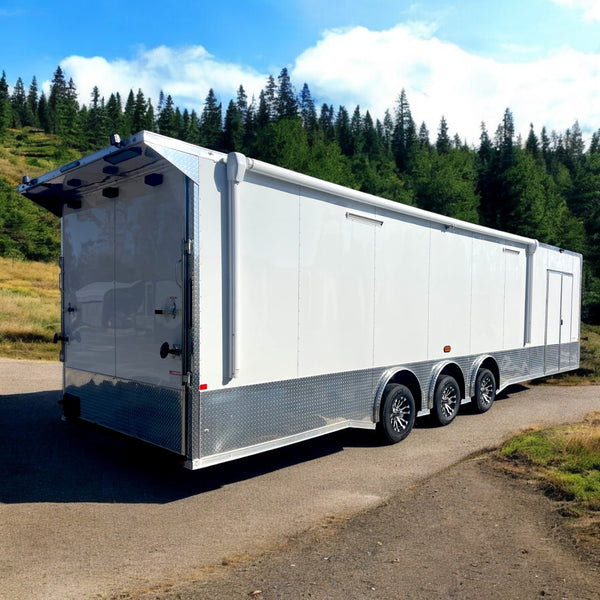
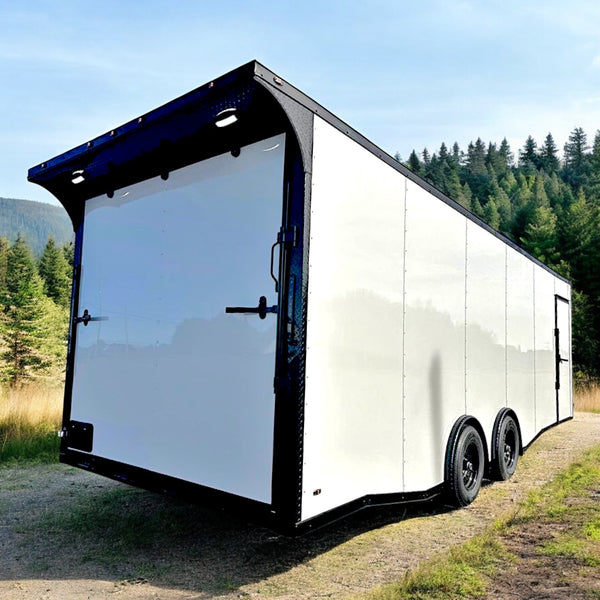
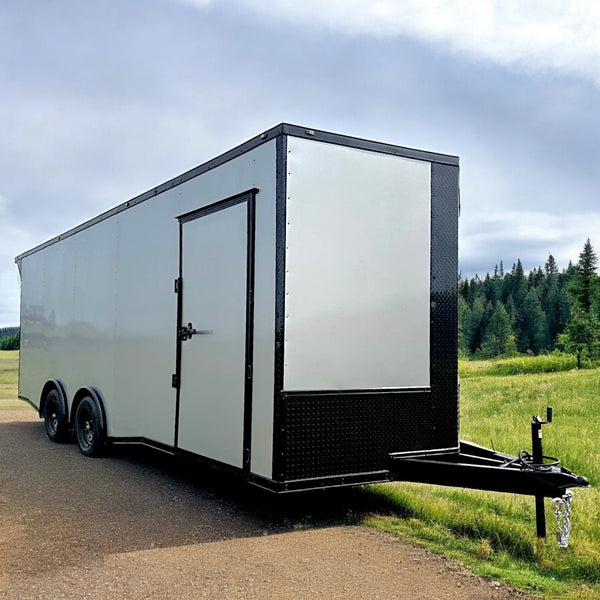
Installing solar on an enclosed race trailer provides reliable off-grid power without depending on shore hookups or generators. A properly planned system can power lights, charge tools and batteries, and run fans or small equipment during race weekends.
Solar panels collect sunlight and store energy in batteries for later use, creating dependable power for travel and parking. Understanding how each component works together helps prevent mistakes and supports long-term performance.
Keep reading to learn how to plan and install a reliable race trailer solar setup.
Essential Planning Insights for Trailer Solar Systems
Before starting a trailer solar project, we should understand the most important parts of planning and installation first.
-
A race trailer solar system helps power lights, chargers, fans, and batteries while parked.
-
Choosing the correct battery, solar panel size, and charge controller improves long-term reliability.
-
Safe mounting, weatherproof wiring, and power planning help prevent electrical problems during travel.
What Is Solar Power for Enclosed Race Trailers?
A race trailer solar setup is a power system that uses roof-mounted solar panels to collect energy from sunlight and store it in batteries inside the trailer. This stored energy can then power lights, fans, tools, and other electrical equipment when outside power is unavailable.
For many race trailer owners, solar power adds convenience during race weekends, track days, or long trips where electrical hookups may be limited. Instead of relying fully on generators or external charging, a solar system provides a quieter and more flexible way to keep important equipment running.
Most enclosed trailer solar systems include a few key parts that work together to safely manage power:
-
Solar panels to capture sunlight
-
A charge controller to regulate battery charging
-
Batteries to store electricity for later use
-
Wiring and fuses for safety and power distribution
-
An inverter for equipment that needs standard AC power
Each component plays an important role in keeping the system stable and reliable. Understanding how they work together makes it easier to choose the right setup for your trailer.
Benefits of Installing Solar on an Enclosed Race Trailer
Solar power adds practical value to an enclosed race trailer, especially in situations where electrical hookups are limited or not available. A properly planned system helps keep essential equipment running smoothly, whether during race weekends, travel, or long-term storage. It also reduces the need to rely on generators or search for external power sources.
Instead of focusing only on convenience, a good solar setup supports consistent, real-world use in a way that fits how race trailers operate day to day.
"We find that demand-side management can reduce the number and cost of requisite solar panels and batteries with the integration of real-time management and controls - a key result for justifying next generation micro-grids for electricity access." - Massachusetts Institute of Technology
Some of the most common benefits include:
Keeps Batteries Charged During Storage
Solar panels help maintain battery levels even when the trailer is not in use. A small, steady charge prevents batteries from slowly losing power during long storage periods and helps extend overall battery life.
Powers Interior Lighting
LED lighting is one of the most efficient uses of solar energy in a trailer. Many setups rely on Best interior lighting for enclosed trailers because LED systems provide clear visibility inside the trailer while using very little power. This makes it easier to organize tools, gear, and equipment, even at night.
Supports Small Accessories
Depending on system size, solar power can support everyday equipment such as ventilation fans, phone chargers, small tool chargers, and even compact refrigeration units. This adds flexibility when working out of the trailer during events.
Reduces Dependence on External Power
With enough battery capacity, the trailer can operate without needing shore power as often. This is especially useful when parking at race tracks, campgrounds, or remote locations where power access is limited.
Runs Quietly Without Fuel
Unlike generators, solar systems operate silently and do not require fuel. This creates a quieter and more comfortable environment during race weekends, especially in busy paddock areas where noise can be distracting.
Common Uses for Race Trailer Solar Systems
Many race trailer owners use solar power for more than just basic lighting. The right setup can support a range of useful trailer accessories.
How much equipment you can power depends on the size of the solar panels and battery system. Smaller setups may only handle simple electrical needs, while larger systems can support more demanding equipment.
Common uses include:
-
Interior LED trailer lighting
-
Tire warmers
-
Tool and battery chargers
-
Portable refrigerators
-
Ventilation fans
-
Phone charging stations
-
Battery maintenance charging
Every trailer uses power differently. A lightweight weekend setup may only need lighting and charging, while larger enclosed race trailers may require more energy for tools and race equipment.
Core Components of an Enclosed Trailer Solar System
Credit: Getaway Man
A reliable solar setup in a race trailer is built from several key parts that work together to deliver stable and consistent power.
At the center of the system are the solar panels, charge controller, batteries, and wiring. Each one has a clear role, and the system only works well when all parts are matched to the trailer’s real usage needs.
When planning a system for Custom Enclosed Trailers, it’s important to think about how the trailer will actually be used. A smaller setup that only powers basic lighting will not need the same capacity as a larger trailer that runs fans, chargers, or additional equipment during race weekends.
Solar Panels for Trailer Roof Installation
Solar panels are the main source of energy in the system. They collect sunlight and turn it into electricity that charges the trailer batteries.
Choosing the right type of panel depends on roof space, trailer size, and how much power you expect to use.
Here are some of the most common options for enclosed race trailers:
Rigid Solar Panels
Rigid panels are durable and often provide stronger power output. They typically last longer and handle changing weather conditions well, making them a common choice for enclosed trailers.
Flexible Solar Panels
Flexible panels are lighter and sit lower against the trailer roof. They can work well when weight matters or when roof shapes make rigid panels harder to install.
Low-Profile Solar Panels
Low-profile designs may help reduce wind resistance during towing. This can be useful for race trailers that travel long distances.
High-Watt Solar Panels
Larger panels with higher output are often better for trailers running refrigerators, chargers, tire warmers, or multiple accessories at once.
No matter which type you choose, secure mounting matters. Race trailers experience constant road vibration, changing weather, and long highway travel. Strong mounting hardware helps keep panels stable over time.
Solar Charge Controller and Power Regulation
A charge controller manages the flow of electricity between the solar panels and the batteries. Its job is to prevent overcharging and help maintain battery health.
Without a controller, batteries may charge unevenly or wear out faster.
Most trailer solar systems use one of two controller types:
PWM Charge Controllers
PWM controllers are usually simpler and more budget-friendly. They work well for smaller systems with lower power demands.
MPPT Charge Controllers
MPPT controllers are often more efficient because they adjust power flow based on sunlight conditions. This can improve charging performance, especially during cloudy weather or changing temperatures.
For larger race trailer systems, MPPT controllers are often worth considering because they can improve overall energy efficiency.
Choosing the Right Trailer Battery
The battery system determines how much stored power is available when the sun goes down or weather conditions limit solar charging.
Choosing the right battery depends on how long you expect to stay off-grid and how much equipment you plan to power.
Common battery options include:
Deep Cycle Batteries
Deep cycle batteries are designed for repeated charging and discharging. They are often a reliable option for trailers that regularly use stored power.
AGM Batteries
AGM batteries are sealed and generally require less maintenance. They also handle vibration well, which can be helpful for trailers that travel often.
Lithium Batteries
Lithium batteries are lighter, recharge faster, and often provide more usable power. While they usually cost more upfront, many trailer owners choose them for long-term efficiency.
Battery safety is also important. A sealed battery box helps protect connections and keeps batteries secure during travel.
Inverter and Power Distribution
Some trailer equipment runs directly on DC power, while other devices need standard AC electricity.
An inverter converts battery power into AC power for equipment such as chargers, power tools, or household-style electronics.
In general:
-
DC power works well for LED lights and ventilation fans
-
AC power is needed for many chargers and appliances
-
Inverters allow standard electronics to run from stored battery power
Smaller solar setups may not need an inverter at all if the trailer only powers lights and fans.
Step-by-Step Installing Solar on an Enclosed Race Trailer
A reliable solar setup for a race trailer depends on how well the system is planned before anything is installed. Good system design is not only about choosing parts, but also about how power is managed, distributed, and protected inside the trailer. When everything is mapped out clearly, it becomes easier to avoid wiring issues, overspending, and setups that do not match real usage needs.
Planning from the beginning also helps ensure the system can handle different conditions during travel and race weekends, especially when multiple devices are running at the same time.
Planning the Trailer Electrical Setup
Before buying equipment, it is important to understand how much power the trailer actually uses in a typical day. This step helps define the right size for solar panels, batteries, and supporting components.
Start by listing all electrical devices you plan to use:
-
Interior LED lights
-
Fans or ventilation systems
-
Tire warmers
-
Refrigerators
-
Tool chargers
-
Battery charging systems
Once the list is complete, estimate how much energy each item consumes. This helps prevent under-sizing the system, which often leads to weak performance during busy race weekends.
A system that is too small may struggle during multi-day events when multiple devices are used at once.
Typical Power Usage Overview
The table below gives a simple overview of how different trailer devices generally affect energy demand:
|
Equipment Type |
Power Demand Level |
Usage Notes |
|
LED Interior Lights |
Low |
Runs efficiently for long hours |
|
Ventilation Fans |
Low–Medium |
Depends on runtime and speed |
|
Tool Chargers |
Medium |
Short bursts of higher load |
|
Refrigerator Unit |
Medium–High |
Continuous power draw |
|
Tire Warmers |
High |
Short but heavy energy usage |
Mounting Solar Panels on the Trailer Roof
Solar panel installation is one of the most critical parts of the entire system. Panels must stay secure while the trailer is moving at highway speeds and exposed to constant vibration, wind, and weather changes.
Before installation, the roof should be properly prepared:
-
Clean the surface thoroughly
-
Measure and mark panel placement
-
Avoid vents, seams, and roof obstacles
-
Plan cable entry points carefully
-
Balance weight across the roof
Many owners choose no-drill mounting systems to reduce the risk of leaks, while others use brackets for added strength in larger setups. Either way, vibration resistance is essential because road movement can gradually loosen weak installations over time.
Wiring and Electrical Integration
Good wiring plays a major role in both safety and long-term reliability. Poor cable management can lead to voltage drops, loose connections, or even equipment damage.
Before connecting anything, it helps to plan cable routing through the trailer in a simple and protected layout.
Key wiring practices include:
-
Using weatherproof cable entry points
-
Installing proper cable glands
-
Protecting exposed wiring from movement
-
Adding fuse protection where needed
-
Securing cables against vibration
Fuses are especially important because they protect the system from faults or short circuits. Without them, small electrical issues can turn into bigger and more expensive problems.
Clean wiring also makes maintenance easier and helps with troubleshooting in the future.
Connecting the Battery and Charge Controller
After the panels and wiring are installed, the next step is connecting the battery system and charge controller. This is the core of the entire setup because it controls how energy is stored and used.
At this stage, power management becomes important. A properly designed system ensures energy flows in a controlled way, preventing overload and keeping components stable during use. This is especially important when running multiple devices that affect both power consumption and internal trailer conditions.
"The charge controller is the 'heart' of a PV system since the charging algorithm and set points determine how effectively and efficiently that the batteries charge - or whether the batteries charge at all. The charge controller has more influence on life cycle cost than any other component." - Sandia National Laboratories / US Department of Energy
This is where Electrical and Climate Control systems play an important role in maintaining stable airflow, temperature balance, and efficient energy use inside the trailer.
A simple and safe installation order usually looks like this:
-
Install the charge controller in a protected location
-
Connect the battery terminals securely
-
Add a battery disconnect switch for safety
-
Test charging performance under sunlight
-
Confirm all fuse placements are correct
A battery disconnect switch is useful for long-term control. It allows the system to be safely shut down during storage or maintenance, helping protect both batteries and connected equipment.
Taking time with this stage helps improve system stability and supports long-term reliability during frequent travel and race use.
Optimizing Performance for Off-Grid Trailer Power

Managing Energy During Race Weekends
Solar systems work best when energy use stays balanced with charging ability. This becomes especially important during long race weekends when equipment is used more often than usual.
Simple habits can help extend battery life and improve overall performance:
-
Turn off lights when not needed
-
Charge tools during daylight hours
-
Use energy-efficient LED lighting
-
Monitor battery levels regularly
-
Avoid unnecessary power use
Small adjustments like these can make a noticeable difference in how long your system lasts each day.
Supporting Trailer Accessories with Solar Power
A properly sized solar system can support several useful accessories at the same time. However, it’s important to match equipment with available power capacity.
Common supported items include:
-
Interior lighting systems
-
Portable refrigerators
-
Ventilation fans
-
Tool chargers
-
Phone charging stations
-
Battery maintenance systems
Higher-demand equipment will require more solar panels and larger battery storage. It’s always better to size the system slightly above your minimum needs to avoid running out of power unexpectedly.
Backup Power Planning
Even a well-built solar setup benefits from having a backup plan. Weather conditions, heavy usage, or unexpected power demand can reduce available energy.
Some simple backup options include:
-
Adding extra battery capacity
-
Installing additional solar panels
-
Carrying a portable charger or generator backup
-
Monitoring system output during use
Backup planning adds peace of mind, especially during multi-day race events where access to power is limited.
Choosing the Right Solar Kit for a Race Trailer

Pre-Built Solar Kit vs Custom System
When setting up solar for a race trailer, there are generally two main options: pre-built kits or custom-built systems. Both can work well, depending on your needs and how much control you want over the setup.
Pre-built kits are often easier to install. They usually include matched components, which can save time during planning and reduce guesswork.
Custom systems, on the other hand, offer more flexibility. They allow you to choose each part based on your exact power needs, trailer size, and future upgrades.
In simple terms:
-
Pre-built kits are more straightforward and faster to set up
-
Custom systems offer more control and long-term flexibility
Smaller trailers often do well with ready-made kits, while larger setups may benefit from a custom approach.
Compact vs High Output Solar Systems
Not every enclosed race trailer needs a large, high-output system. The right size depends on how much equipment you actually plan to run.
A simple way to think about it:
-
Small systems: basic lighting and phone charging
-
Medium systems: lighting, fans, and small accessories
-
High-output systems: multiple devices, including higher-demand equipment
It’s often helpful to build a little extra capacity into the system. This gives more stability during cloudy days or when power use is higher than expected during race weekends.
Important Features to Look For
Not all solar equipment is designed for the same conditions. Since race trailers travel often, durability and reliability matter just as much as power output.
Before choosing components, look for features like:
-
Weather-resistant materials
-
Strong and secure mounting hardware
-
Vibration protection for road travel
-
Safe and well-insulated wiring
-
Compatibility between panels, controller, and batteries
A well-matched system is easier to maintain and usually performs more consistently over time.
Common Mistakes in Trailer Solar Installation
Choosing a System That Is Too Small
One of the most common issues is underestimating power needs. Race weekends often involve more equipment than expected, which can quickly drain an undersized system.
This usually happens when:
-
Battery storage is too limited
-
Solar panels are not powerful enough
-
Future equipment needs are not considered
Planning for a bit more capacity than you currently need can help avoid power shortages later.
Poor Roof Mounting
Solar panels must stay secure while the trailer is in motion. Weak mounting can lead to shifting panels, leaks, or long-term damage.
Good installation should include:
-
Strong mounting brackets
-
Proper sealing against water
-
Even weight distribution
-
Resistance to vibration and wind
Taking time during installation helps protect both the trailer and the solar equipment.
Unsafe Wiring Practices
Electrical safety is often overlooked, but it is one of the most important parts of any trailer solar system.
Common wiring issues include loose connections or missing protection components.
A safe system should always include:
-
Proper fuse protection
-
Clean and secure cable routing
-
Weatherproof connectors
-
A battery disconnect switch
Well-organized wiring not only improves safety but also makes future maintenance much easier.
FAQs
How big should a race trailer solar system be?
It depends on usage. Light setups need less power, while full race setups require larger batteries and panels.
Can solar power run multiple trailer devices at once?
Yes, if the system is properly sized with enough storage and output capacity.
Is a charge controller necessary?
Yes, it protects batteries and ensures stable charging.
What type of battery is best for race trailers?
Lithium batteries are often preferred for efficiency, while deep cycle and AGM are also common.
How long does a solar setup last?
With proper installation and care, components can last several years or more.
Building Reliable Power for an Enclosed Race Trailer
A custom enclosed race trailer solar setup is most effective when it matches real usage needs. It improves efficiency, supports daily operations, and provides reliable off-grid power for long-term use. With the right planning and components, the system becomes a dependable part of a mobile setup built for consistent performance.
If you’re looking for a ready-built option, the 24ft Ultimate Auto & Toy Hauler is a strong example of durable construction designed for long-term use. You can view it here: Backyard Escapism
Or, if you want something tailored to your exact needs, you can start Build Your Ideal Trailer Today
References
1. https://dspace.mit.edu/bitstream/handle/1721.1/119258/Reja%20article.pdf?sequence=1&isAllowed=y#4#1
2. https://digital.library.unt.edu/ark:/67531/metadc674154/m2/1/high_res_d/444044.pdf