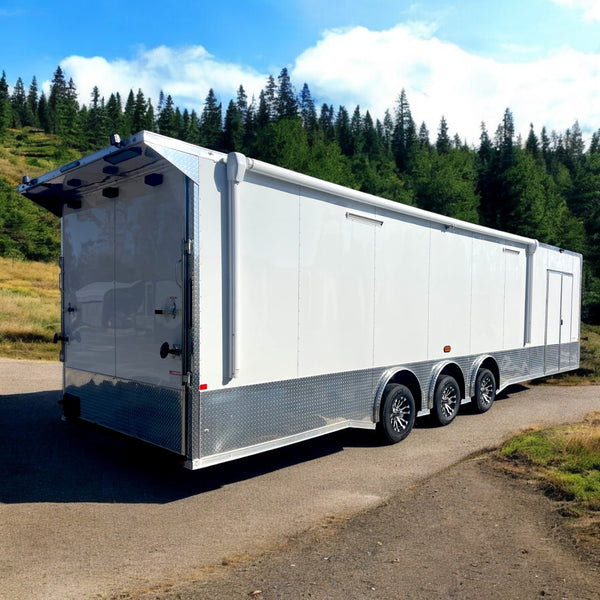
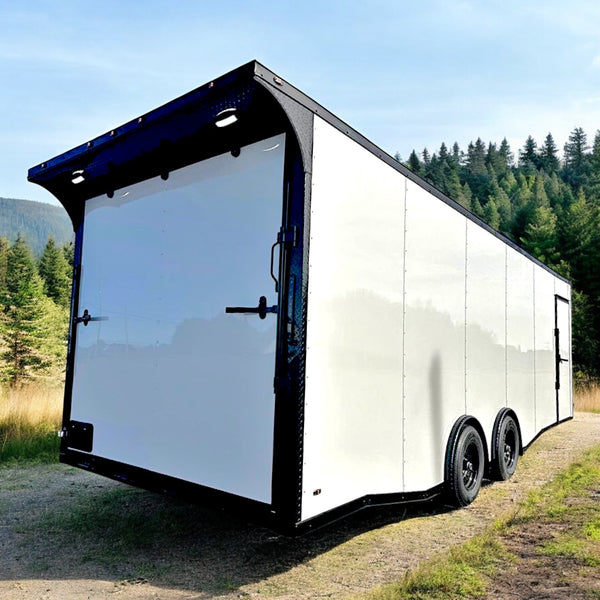
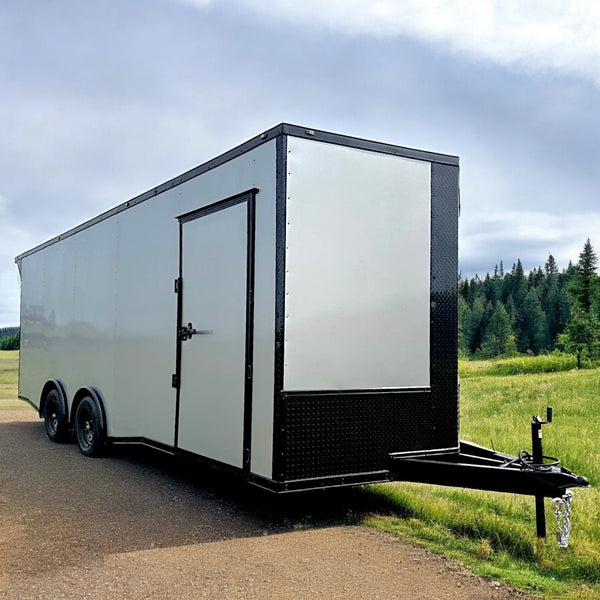
Why Layout and Vehicle-Specific Sizing Matter

Why Layout and Vehicle-Specific Sizing Matter

Custom enclosed trailer layout refers to how interior space is measured, arranged, and designed to safely transport vehicles, tools, or cargo. 

Interior dimensions such as width, height, and floor length directly affect how securely items fit and how easily they can be loaded or unloaded. 

Vehicle-specific sizing ensures that trailers match the exact requirements of motorcycles, ATVs, golf carts, or small cars. 

Without proper measurements, cargo may not fit safely or efficiently. Understanding layout planning and sizing helps us design trailers that meet real transport needs. 

Continue reading to learn how proper measurements improve trailer functionality and safety.

Key Layout Principles for Vehicle-Specific Custom Enclosed Trailers

1. Interior Layout Defines Usable Trailer Space

Interior layout planning determines usable cargo space, including wall-to-wall width, floor length, and ceiling height to ensure equipment or vehicles fit safely.

2. Vehicle-Specific Sizing Prevents Loading Issues

Vehicle sizing charts, ramp door dimensions, door height, and ramp angle calculations help ensure vehicles can enter, load, and unload without clearance problems.

3. Structural Measurements Influence Interior Clearance

Axle spacing, tandem axle placement, and drop axle design affect floor height and interior room, which directly impact cargo clearance and loading stability.

Basic Interior Dimensions and Space Planning

Interior dimensions determine how well cargo fits inside a custom enclosed trailer. Careful measurements help ensure vehicles and equipment can load safely without clearance issues.

Trailer Width and Interior Space

Choosing enclosed trailer size guide plays an important role when determining the right trailer width because selecting the correct size ensures that both cargo capacity and interior usability are properly balanced from the start.

Trailer width directly affects how much cargo we can carry and how easily we can move items inside the trailer.

Key width considerations include:

  • Enclosed trailer width options that vary depending on the trailer model and intended cargo
  • Wall-to-wall width calculations that determine usable interior space
  • 8.5-wide vehicle clearance commonly used for larger vehicles or equipment

These measurements, when evaluated using a proper choosing enclosed trailer size guide, help us confirm that cargo fits comfortably without damaging walls or reducing maneuvering space, while also ensuring the trailer remains practical and efficient for its intended use.

Interior Height and Ceiling Clearance

Best enclosed trailer layouts ideas are essential when planning interior height because an effective layout does not only focus on floor space, but also ensures vertical clearance is optimized for different types of cargo.

Interior height affects whether tall cargo can fit inside the trailer. Ceiling design and structural supports must also be considered, especially when applying best enclosed trailer layouts ideas to balance usability, safety, and space efficiency.

Important height and ceiling factors include:

  • Interior height clearance specifications that define the vertical cargo limit
  • Custom ceiling height specifications based on the trailer build
  • Roof bow interference checks to ensure ceiling supports do not block tall cargo

Proper ceiling clearance, when guided by best enclosed trailer layouts ideas, prevents loading problems and allows safe transport of tall equipment while ensuring the trailer layout remains practical and well-optimized for real-world use.

Floor Length and Cargo Fit

Who needs enclosed car trailer stacker is an important consideration when evaluating floor length because stacker-style transport systems require significantly more precise floor planning to safely accommodate multiple vehicles or vertically arranged cargo.

Floor length determines the maximum size of cargo that can be transported. Accurate measurements prevent loading limitations, especially when considering who needs enclosed car trailer stacker, where multi-level storage or stacked vehicle configurations demand additional space for ramps, lift systems, and secure positioning.

Important floor planning factors include:

  • Exact floor length measurements for accurate cargo planning
  • 6×12 trailer interior fit often used for compact equipment or small vehicles
  • 7×16 cargo space calculations that support larger cargo layouts

When floor space is planned correctly, particularly for users who fall under who needs enclosed car trailer stacker, cargo can be positioned securely while maintaining proper weight balance and ensuring the structural integrity needed for stacked or multi-vehicle transport systems.

Vehicle Specific Fit and Cargo Matching

Credit: Adventure Gear TV

How to design car lift trailer setup is closely related to vehicle-specific sizing because designing a proper lift system requires precise measurements of both the vehicle and the trailer interior to ensure safe lifting and secure positioning.

Vehicle-specific sizing ensures that the trailer interior matches the exact size of the cargo we plan to transport, and when applying how to design car lift trailer setup, this sizing becomes even more critical to accommodate lift mechanisms, clearance height, and wheel placement so that vehicles can be loaded and secured without risk of damage or imbalance.

Vehicle Sizing Guides

Different types of vehicles require different trailer dimensions. Sizing guides help confirm compatibility before building or purchasing a trailer.

Common vehicle sizing considerations include:

  • ATV fit trailer size for single or multiple all-terrain vehicles

  • UTV sizing requirements that account for wider frames and roll cages

  • Side-by-side sizing guides that help determine necessary trailer width and length

Using these guides reduces the risk of loading issues or improper cargo positioning.

Vehicle Transport Layouts

Transport layouts help organize interior space based on the type of vehicle being carried.

Typical transport layouts include:

  • Motorcycle transport layouts that allow space for tie-down points and wheel chocks

  • Car hauler interior width designed to support full vehicle transport

These layouts help us plan safe cargo placement while maintaining stability during travel.

Door and Ramp Access Measurements

Interior of white enclosed trailer configured as organized workspace with shelves, tool storage, cabinets, and workbench inside clean storage area.

Door openings and ramp systems determine how easily cargo can enter and exit the trailer. Proper measurements improve loading safety and efficiency.

Rear Door and Ramp Layout

Rear ramps are commonly used for loading vehicles and heavy equipment.

Important ramp measurements include:

  • Ramp door opening dimensions that determine loading clearance

  • Ramp angle calculations that help prevent bottoming out when vehicles enter

  • Spring-assist ramp length that reduces lifting effort when opening the ramp

Correct ramp design helps ensure safe loading even with heavy cargo.

Door Opening and Swing Clearance

Rear doors must provide enough space for vehicles to enter without obstruction.

Key rear door considerations include:

  • Door height matched to vehicle size to prevent roof contact

  • Rear door swing radius to ensure doors open fully without hitting nearby objects

  • Barn door double openings that allow wider cargo access

These features make loading easier and reduce the risk of damage.

Side Door Access

Side doors provide convenient access to the trailer interior without opening the rear door.

Important side door measurements include:

  • Side door access width for safe entry and equipment movement

  • RV door swing space that ensures the door opens fully

  • Security screen door fit for added ventilation and safety

Side access doors make it easier to enter the trailer and reach equipment during transport.

Axle, Wheel, and Structural Layout Impact

Axle placement and structural layout influence interior room and cargo balance. These elements affect stability, load distribution, and usable space inside the trailer.

Axle Placement and Interior Room

Axle position determines how weight spreads across the trailer. Proper placement improves towing stability and maintains enough usable interior cargo space.

Key axle layout considerations include:

  • Axle spacing impact layout that affects interior balance and cargo distribution

  • Tandem axle interior room that supports heavier loads and better stability

  • Drop axle height gain that increases interior height by lowering the trailer deck

These structural choices help maintain proper balance between cargo space and towing performance.

Wheel Well and Fender Space

Wheel wells and fenders extend into the trailer interior. Measuring these areas prevents interference with vehicles or stored equipment.

Important wheel well measurements include:

  • Wheel well spacing measure that determines available interior width

  • Fender intrusion measure that identifies how much space the wheel housing occupies

  • Wheel well height clearance that ensures cargo does not contact the wheel housing

Careful planning around wheel wells prevents cargo damage and improves interior layout flexibility.

Frame and Floor Structure

The internal frame and floor system support the trailer structure. Their design affects strength and cargo weight capacity.

Important structural layout factors include:

  • Frame cross member layout that strengthens the trailer floor

  • Floor joist spacing effect that supports cargo weight distribution

  • Wall post positioning that maintains wall strength and supports mounted equipment

These structural components help maintain durability while supporting heavy cargo loads.

Storage, Workspace, and Interior Equipment Layout

A well-planned interior layout improves organization and allows the trailer to function as a mobile workspace or transport unit, especially when applying side-by-side storage trailer concepts], where storage zones are arranged in parallel sections to maximize space efficiency and make tools, equipment, or cargo easier to access during use.

By integrating side-by-side storage trailer concepts, the layout becomes more structured and practical, allowing users to separate different types of cargo while still maintaining smooth workflow and efficient movement inside the trailer.

Work and Storage Planning

Workspace and storage systems must be sized correctly so tools and equipment can be used safely inside the trailer, especially when applying motorcycle storage trailer interior ideas, where the interior layout is designed to efficiently accommodate motorcycle-related tools, spare parts, and maintenance equipment in a compact yet highly functional setup.

Key planning elements include:

  • Workbench space allocation that provides room for tool use and repairs
  • Shelving unit dimensions designed for organized equipment storage
  • Cabinet depth clearance that ensures cabinet doors open without blocking pathways

These features, when guided by motorcycle storage trailer interior ideas, allow tools and supplies to remain secure, well-organized, and easily accessible during transport while still maintaining a safe and efficient working environment inside the trailer.

Cargo Securing Layout

Cargo securing systems keep equipment stable during travel and reduce movement inside the trailer.

Important tie-down layout features include:

  • E-track vertical placement for adjustable cargo restraint points

  • D-ring floor positioning for strong anchor points attached to the trailer floor

Proper anchor placement ensures cargo remains secure during braking and turning.

Upper Storage Space

Upper storage areas use vertical space without reducing floor capacity.

Important upper storage considerations include:

  • Loft storage height requirements for lightweight equipment storage

  • Roof vent clearance space to prevent interference between storage structures and ventilation systems

Using upper storage helps maximize interior space without crowding the trailer floor.

Utility Systems Layout and Equipment Space

Utility systems support electrical equipment and power distribution inside the trailer. Careful planning ensures safe installation and efficient use of space.

Electrical Layout Planning

Electrical systems must be positioned where they remain accessible while avoiding interference with cargo areas.

Important electrical layout features include:

  • Interior lighting placement that provides clear visibility inside the trailer

  • Electrical outlet positioning for powering tools and equipment

  • USB station panel cutout that allows installation of small charging ports

Proper electrical planning helps support daily trailer operations.

Equipment Mounting Space

Large electrical components require dedicated mounting areas to ensure safe installation and ventilation.

Important mounting considerations include:

  • Power inverter shelf depth for secure equipment installation

  • Generator slide space requirements that allow the generator to extend outward during operation

  • Battery compartment sizing to safely house power storage systems

These components support independent power systems inside the trailer.

Wiring and Conduit Planning

Electrical wiring must be routed safely through the trailer structure to prevent damage and overheating.

Key wiring layout elements include:

  • Conduit wiring chase space for protected cable routing

  • Inverter cooling vent area that prevents overheating of electrical components

Proper wiring management improves safety and simplifies maintenance.

Climate and Ventilation System Clearance

Ventilation and climate systems help maintain safe interior conditions, especially when transporting equipment that produces heat or fumes.

Ventilation System Space

Ventilation systems require dedicated space so airflow remains unobstructed.

Important ventilation planning features include:

  • Ventilation fan clearance that allows proper airflow around the fan system

  • Roof vent clearance space that prevents interference with interior storage or equipment

Good airflow helps remove heat and moisture from the trailer interior.

HVAC Preparation

Climate control systems may be installed when temperature regulation is required for cargo or workspace use.

Important HVAC preparation factors include:

  • A/C unit roof penetration for installing roof-mounted air conditioning systems

  • Heater duct routing path that allows warm air to move through the trailer interior

Planning these systems early prevents structural modifications later.

Exterior Layout Impact on Interior Space

White tandem-axle enclosed cargo trailer displayed outside truck and trailer sales dealership building.

Exterior trailer design can directly affect the interior layout. Structural features at the front and bottom of the trailer influence usable cargo space.

Trailer Nose and Front Structure

Front trailer design changes both aerodynamics and interior storage capacity.

Important front structure considerations include:

  • V-nose length addition that increases interior cargo space near the front

  • Tongue length extension that supports better towing balance and turning clearance

These design choices affect both handling and usable space.

Ground Clearance and Ramp Geometry

Trailer height and hitch position determine how ramps align with the ground during loading.

Important ground clearance factors include:

  • Ground clearance ramp angle that affects how easily vehicles can enter the trailer

  • Hitch height adjustment that ensures the trailer remains level when connected to the tow vehicle

Correct geometry prevents loading problems and improves safety.

Stability and Support Layout

Support systems stabilize the trailer when parked or loading cargo.

Important stability features include:

  • Stabilizer jack footprint that supports the trailer during loading or stationary use

These supports reduce movement when heavy cargo enters or exits the trailer.

Power System Layout and Roof Space

Power systems and roof equipment require careful space planning to avoid interfering with ventilation, structural supports, or cargo areas.

Solar and Roof Equipment

Solar systems require open roof space and proper mounting structure.

Important roof layout considerations include:

  • Solar panel roof mount space that allows safe installation and wiring access

Roof planning ensures solar equipment can operate efficiently without blocking vents or other systems.

Fuel and Utility Storage

Certain trailers include storage areas for fuel or operational equipment.

Important utility storage features include:

  • Fuel station compartment size designed to safely store portable fuel containers or refueling systems

These compartments support equipment that requires fuel while maintaining safe storage conditions.

Load Balance and Weight Planning

Weight planning helps a trailer remain stable during towing and loading. Proper balance protects the trailer structure and improves overall driving safety.

Improperly loaded vehicles can sway or lose control more easily.” - trailersafetyweek.com

Feature / Factor

Description

Why It Matters

Payload Floor Strength

Maximum weight the trailer floor can safely support

Prevents bending, structural damage, and floor failure.

GVWR Dimension Limit

Maximum total trailer weight (Trailer + Cargo)

Ensures the trailer operates within legal and mechanical limits.

Tongue Weight Balance Point

Proper load pressure applied to the hitch

Improves towing stability and significantly reduces dangerous sway.

Turning Radius Trailer Size

Physical space required for safe cornering

Affects maneuverability and prevents "jackknifing" or hitting obstacles.

Tow Vehicle Capacity Match

Trailer load matched to vehicle’s towing limits

Confirms safe braking and acceleration without straining the engine.

Balanced cargo placement and careful attention to these factors ensure safer driving, reduce sway, and protect both the trailer and tow vehicle.

Windows and Visibility Layout

Window placement affects both visibility and interior lighting inside the trailer. Careful planning helps avoid structural conflicts with the trailer frame.

Window and Frame Placement

Windows must fit within the trailer wall structure without weakening the frame.

Important window layout considerations include:

  • Window frame cutout size, which determines the correct opening dimension for installation

Accurate measurements help ensure windows fit securely while maintaining the strength of the trailer wall.

Exterior Finish and Visual Layout

Exterior finishing elements affect the trailer’s appearance while also helping protect its surface from weather, debris, and daily wear.

Paint and Decal Placement

Paint and decals require smooth surfaces and proper spacing to ensure clean installation and long-term durability.

Important finishing considerations include:

  • Custom paint clearance gaps, which prevent paint overlap near joints and trim areas

  • Decal application surface area, which provides adequate flat space for graphics or identification markings

These details help maintain a clean and professional trailer exterior.

How Proper Trailer Layout Improves Practical Use

Infographic explaining trailer layout, vehicle-specific sizing, axle placement, weight distribution, and cargo stability for enclosed trailers.

A well-planned trailer layout improves efficiency and safety when transporting cargo, tools, or vehicles. Clear interior design reduces loading difficulties and wasted space.

Proper layout planning supports several practical benefits:

  • Maximizing interior space so cargo fits without unnecessary gaps

  • Improving cargo security through correct placement of tie-down systems

  • Simplifying vehicle loading with proper ramp angles and door sizing

  • Improving transport efficiency by organizing cargo weight and interior layout

These improvements help ensure the trailer performs reliably during daily use.

Planning a Vehicle-Specific Custom Trailer Build

Designing a trailer around the exact vehicle or cargo it will carry helps prevent loading problems and improves overall safety. As emphasized in trailer safety recommendations, 

choose a trailer that’s built specifically for the load it will handle. A trailer designed to handle the correct load safely eliminates the risk of structural failure as well as associated accidents.” - forconstructionpros.com

Key planning steps include:

  • Determining the trailer size based on the vehicle being transported

  • Adjusting the interior layout to match the shape and size of the cargo

  • Ensuring door and ramp dimensions match vehicle height and width

  • Calculating trailer weight distribution before construction begins

Careful planning allows the trailer to support specific transport needs while maintaining safe and stable towing performance.

FAQ

Why is interior layout important in a custom enclosed trailer?

Interior layout determines how efficiently cargo fits inside the trailer. A well-planned layout improves loading, protects equipment, and helps maintain proper weight balance during transport.

How do we choose the right trailer size for a vehicle?

We measure the vehicle’s length, width, and height, then match those dimensions with trailer floor length, interior width, and door opening sizes.

What factors affect trailer loading access?

Ramp door dimensions, ramp angle, door height, and side door width all influence how easily vehicles or equipment can enter the trailer.

Why does weight distribution matter in trailer design?

Balanced cargo placement improves towing stability, reduces trailer sway, and prevents excessive strain on the hitch and tow vehicle.

How does vehicle-specific sizing improve safety?

Sizing the trailer to match the cargo ensures proper clearance, prevents loading damage, and allows secure placement of tie-down systems.

Maximize Efficiency with Purpose-Built Trailers

A custom enclosed trailer is more than storage. It’s a tailored mobile solution that fits your vehicles, protects your cargo, and streamlines every task. 

Thoughtful design and precise planning improve efficiency, safety, and long-term reliability, turning every haul into a smooth, confident experience. Invest in a trailer built to support your workflow today and for years to come.

Ready to experience premium construction? Explore the 24ft Ultimate Auto & Toy Hauler at Backyard Escapism

Or start designing a trailer built exactly for your needs. Build Your Ideal Trailer Today

References

1. https://www.trailersafetyweek.com/loading

2. https://www.forconstructionpros.com/trucks/trucks-accessories/article/22314501/talbert-manufacturing-inc-ensuring-safety-with-heavyhaul-trailers

Related Articles

0 comments

Leave a comment