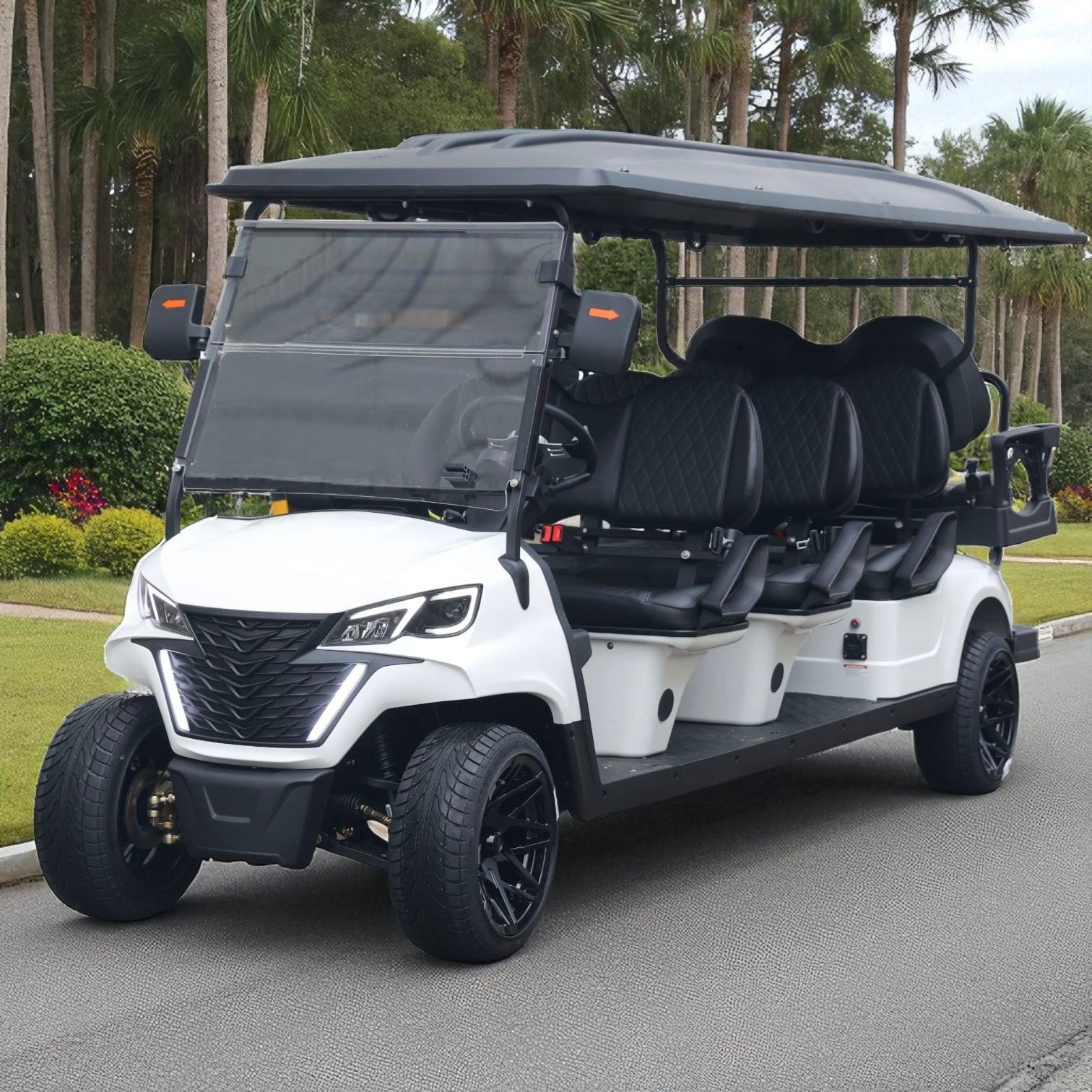
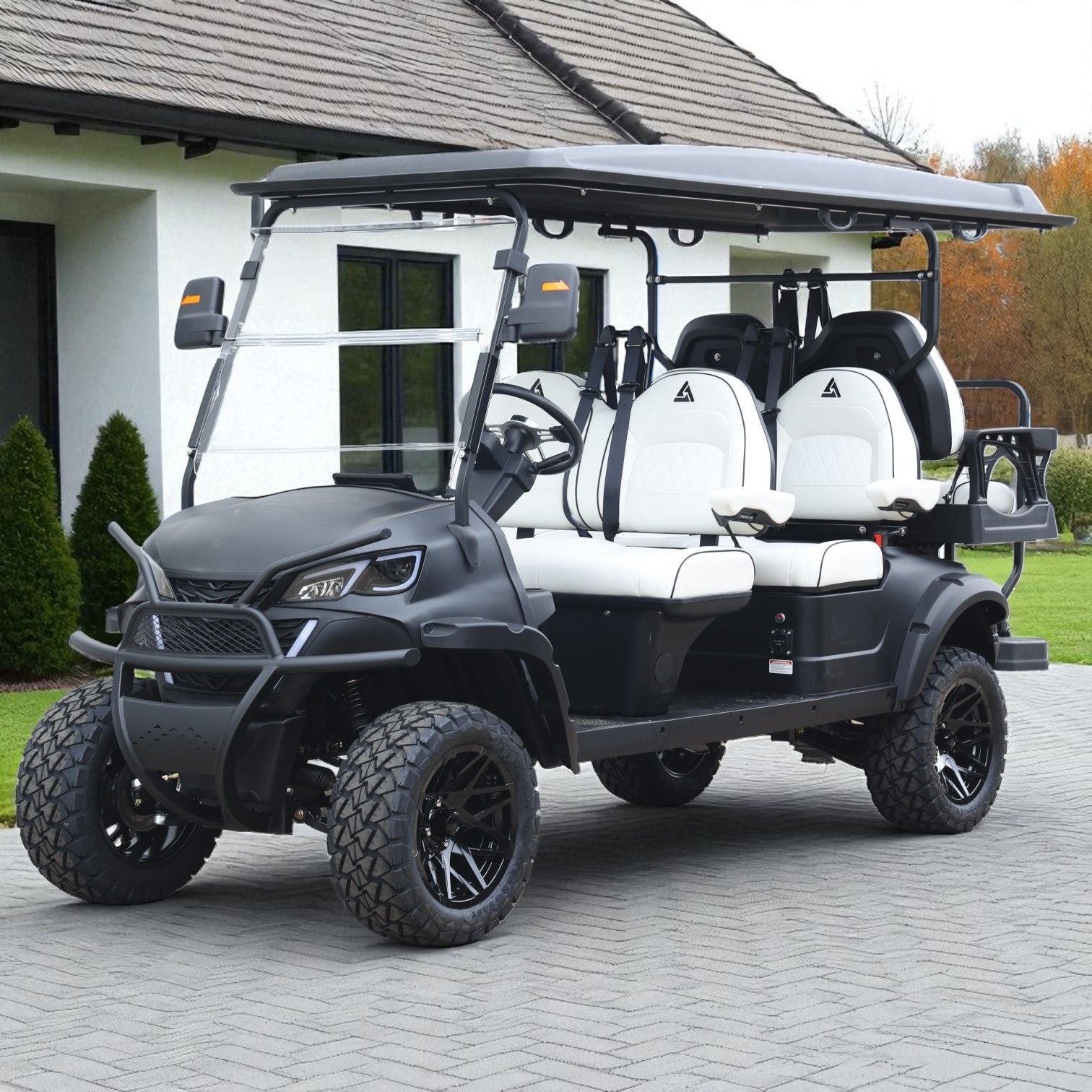
A PTV golf cart is a Personal Transportation Vehicle,a low-speed vehicle legally approved to drive on certain public roads. Unlike a typical golf cart that stays confined to the course, a PTV meets specific state and federal rules, making it street-legal in some neighborhoods.
This legal status means you can use it beyond just golf courses, for short trips around your community.
Understanding what makes a PTV different helps you know where and how you can drive it safely and legally. Keep reading to get the full picture on owning and operating a PTV golf cart.
Key Takeaways
-
A PTV is a street-legal vehicle with a top speed between 20-25 mph.
-
It requires specific equipment like lights, mirrors, and seat belts.
-
Operating a PTV on public roads demands a valid driver's license and insurance.
What is a PTV Golf Cart?
The acronym PTV stands for Personal Transportation Vehicle. This is not just a marketing term. It's a specific classification for a type of motor vehicle.Â
A PTV is defined as a four-wheeled vehicle that can reach a top speed of more than 20 miles per hour but not more than 25 miles per hour on a paved surface. It has a gross vehicle weight rating of less than 3,000 pounds.
This definition is important because it draws a legal line, especially as an estimated 478,000–760,000 low-speed electric vehicles are already in operation worldwide [1].
A basic golf cart used only on a private course might have a lower top speed. A PTV is built and certified for limited use on public streets.
Why does this definition matter so much? It comes down to legal and safety implications. When a vehicle is classified as a PTV, it must adhere to a set of federal safety standards.
This certification process ensures the vehicle is safe for its intended use on roadways with other traffic. It's the difference between a recreational toy and a recognized form of transportation. This status grants it certain privileges, like the ability to cross public roads, but also imposes specific responsibilities on the owner and operator.
The core purpose of a PTV is personal transportation within a confined area. You see them in master-planned communities, on large campuses, and in golf cart-friendly towns.
They bridge the gap between a full-sized car and a standard golf cart. They offer more utility and range than a cart but with lower operating costs and a smaller footprint than a car. Understanding that a PTV is a regulated vehicle class is the first step to using one correctly and safely.
-
Legally defined top speed of 20-25 mph.
-
Must meet federal motor vehicle safety standards.
-
Intended for use on designated public roads.
PTV vs. LSV vs. Standard Golf Cart: Key Differences

It's easy to get these terms confused, but the distinctions are critical. A standard golf cart is designed primarily for use on golf courses.
Its top speed is typically capped at around 15 mph. It often lacks the safety equipment required for street use.
A Low-Speed Vehicle (LSV) is a step up. LSVs have a top speed between 20 and 25 mph, like a PTV. In many contexts, "PTV" and "LSV" are used interchangeably, as the performance specifications are nearly identical.
The difference often lies in the manufacturer's certification and intended market.
Sometimes, "PTV" is used to describe vehicles that are essentially LSVs but are marketed for personal and recreational use beyond just golf, a distinction that becomes clearer when exploring golf cart terminology and how these classifications are commonly used.
The legal requirements, yet, are what truly matter for the driver. Whether a vehicle is called an LSV or a PTV, if it's meant for street use, it must have the same mandatory equipment.
This includes headlights, taillights, turn signals, rearview mirrors, a parking brake, a Vehicle Identification Number (VIN), and seat belts.
What does this mean in practice for different use cases? If you only need a vehicle for your private property or a golf course, a standard cart suffices. If you want to legally drive on public roads with speed limits up to 35 mph (laws vary by state), you must have a street-legal vehicle,either an LSV or a PTV.
Trying to use a standard cart on public roads is illegal and unsafe. The required equipment on a PTV/LSV is not optional. It's there to protect you, your passengers, and others sharing the road.
-
Standard Golf Cart: For private property, max speed ~15 mph.
-
LSV/PTV: For designated public roads, max speed 20-25 mph.
-
Key Differentiator: Mandatory safety equipment for road use.
Regulations and Requirements for PTVs
Owning a PTV means agreeing to follow the rules. These regulations are in place for everyone's safety. The required equipment is comprehensive.
Lighting is a major component. A PTV must have headlights that illuminate the road ahead adequately. It needs taillights, brake lights, and turn signals that are visible to other drivers. These are not add-ons.
They are integrated into the vehicle's design from the factory to meet specific brightness and placement standards.
Beyond lights, other features are mandatory. A PTV must have at least one rearview mirror, and often two side mirrors are required.
A horn audible from a certain distance is necessary to alert others. Perhaps most importantly, seat belts for every seating position are a non-negotiable safety feature. Some states also need a windshield, either full or partial. These requirements transform the vehicle from an open-air cart into a safer, more controlled environment.
The responsibilities extend beyond the vehicle itself to the driver. In virtually all jurisdictions, operating a PTV on a public road requires a valid driver's license. This ensures the operator understands basic traffic laws. Insurance is also typically mandatory.
You must register the vehicle with your state's Department of Motor Vehicles and display a license plate. Local and state regulations can vary significantly.
Some towns embrace golf carts and LSVs, while others have strict rules about where they can be driven. It is the owner's duty to know and obey these local laws.
Where Can You Drive a PTV?

The freedom a PTV offers is one of its biggest appeals, but that freedom has boundaries. On golf courses, PTVs are welcome, but you must still follow course-specific rules and etiquette.
This usually means staying on the cart paths, not driving too close to greens, and observing any weather-related restrictions. On private property, like a gated community or a large estate, you have much more flexibility, though the community's own rules will apply.
The most complex area is public roads. A PTV is generally permitted on public roads where the posted speed limit is 35 mph or less. But, this is a general rule, and local laws can override it.
Some cities may only allow PTVs to cross a road, not travel along it. Others may choose specific routes. It is crucial to check with your local city or county government to understand exactly where you can and cannot drive.
Driving a PTV on a road with a high speed limit is extremely dangerous and illegal.
If you're planning to stay fully compliant while enjoying neighborhood mobility, exploring street-legal golf carts can help you find models already equipped for safer public-road use.
There are also areas where PTVs are almost universally prohibited. You cannot drive them on federal interstate highways or any limited-access freeway.
Sidewalks are for pedestrians, not motor vehicles, so driving a PTV on a sidewalk is illegal. Understanding the geography of your legal driving area is a key part of PTV ownership. It's about knowing the map of permissible routes, which ensures your rides are both enjoyable and lawful.
Practical Considerations for PTV Owners
Once you understand the rules, it's time to think about the day-to-day reality of PTV ownership. For electric models, which are most common today, battery life is a primary concern.Â
Modern lithium batteries offer significant advantages. They provide a longer range per charge, often 30–50 miles or more.
They charge faster and have a much longer lifespan than traditional lead-acid batteries, similar to innovations found in new golf carts, which emphasize strong performance and efficiency. Maintenance is simpler, with no water levels to check.
The choice between electric and gas motors is largely settled in favor of electric for PTVs. Electric motors are quieter, which is better for neighborhoods. They produce zero emissions.
They have instant torque for good acceleration and require less maintenance,no oil changes or spark plugs. The main advantage of gas used to be range and power, but modern high-voltage electric systems have closed that gap.
For personal transportation, electric is the practical and environmentally friendly choice.
Customization is a big part of the appeal. PTVs can be tailored to your needs and style.
-
Lift kits and larger tires for a more aggressive look and better ground clearance.
If off-path stability or rugged terrain matters to you, browsing lifted golf carts can give you options designed for better clearance and stronger road presence. -
Upgraded seats for comfort, including premium vinyl or custom fabrics.
-
Functional accessories like rear seats, cargo boxes, and canopies.
-
Entertainment systems with Bluetooth speakers and screens.
The cost of ownership includes the initial buy and ongoing expenses.
While the upfront cost of a new, street-legal PTV is higher than a basic golf cart, the operating costs are low, especially as the global golf cart and neighborhood electric vehicle market is projected to grow from US $4.9 billion in 2023 to nearly US $9 billion by 2030, showing rising adoption and long-term value [2].
Electricity is cheap compared to gasoline. Maintenance is minimal. There are no annual emissions tests. When you factor in the utility and enjoyment, a PTV can be a very cost-effective solution for local transportation.
Safety First: Operating PTVs Responsibly

Safety is the most important consideration. The essential safety features are there for a reason. Always use the seat belts. They are your primary protection in the event of a sudden stop or a minor collision.
Make sure all passengers are seated while the vehicle is moving. The rollover risk, while low on paved roads, is still present, especially during sharp turns. Seat belts keep everyone securely in place.
Safe driving practices are just as important as they are in a car. Obey all traffic signs and signals. Use your turn signals well in advance of a turn to communicate your intentions to other drivers.
Be aware that your vehicle is small and quiet, so other drivers might not see or hear you as easily. Drive defensively. Avoid distractions. Don't use your phone while driving. The open nature of a PTV can make it feel casual, but you are still operating a motor vehicle.
Passenger safety is your responsibility. Do not exceed the stated seating capacity. An overloaded vehicle is harder to control and stop. Make sure passengers know to keep arms and legs inside the vehicle at all times.
Especially with children, reinforce the importance of sitting properly and wearing seat belts. Avoiding accidents comes down to vigilance, obeying the rules of the road, and understanding the limitations of your PTV.
It's not a sports car. It's a slow, steady vehicle for getting around safely and comfortably.
Your Path to the Right PTV
Choosing the right PTV involves considering several factors. Your intended use is the biggest one. How many people do you need to carry regularly? Do you need cargo space for groceries or golf bags?
For families or larger groups, checking out
6-seater golf carts can help you find spacious setups that balance comfort and practicality.
Will you be driving it mostly during the day, or will you need excellent lighting for night use? Your budget will naturally guide your decision, but remember to think of it as an investment in a vehicle that should last for many years.
The features you select can greatly enhance your experience. A 10-inch multimedia screen with a backup camera adds convenience and safety. A
n upgraded sound system makes cruising more enjoyable, especially when you know what to look for in new golf carts and how certain upgrades change day-to-day comfort.
LED lighting not only looks great but provides superior visibility. Consider the battery system. An extended-range lithium battery might be worth the extra cost if you plan on long trips without frequent charging. These choices allow you to build a PTV that fits your life perfectly.
The warranty and support network are critical. A strong warranty protects your investment. Look for comprehensive coverage on the powertrain and a long warranty on the lithium battery, like five years.
Understand where you can get service if needed. A reputable company will have a process for supporting you, even from a distance, by shipping parts and helping you find local service providers. This peace of mind is invaluable.
FAQ
What should I check before driving a personal transportation vehicle in my neighborhood?
Before you drive a personal transportation vehicle, check local golf cart regulations, golf cart usage laws, and golf cart parking laws.
Look at golf cart safety features, golf cart speed limits, and any golf cart driver age limit rules. Some areas treat a cart like a low-speed vehicle, so you may need street-legal golf cart lighting requirements, side mirrors golf carts, and even golf cart insurance.
How do I compare PTV vs LSV when choosing between golf cart types?
When comparing PTV vs LSV, look at golf cart types, neighborhood electric vehicle rules, and golf cart on public roads requirements.
Check golf cart license requirements, golf cart registration process steps, and whether golf cart seat belts or golf cart turn signals are required. Also consider golf cart speed governor settings, golf cart curb weight, and golf cart seating capacity for daily use.
What affects golf cart battery life and the range per charge on electric golf carts?
Golf cart battery life depends on golf cart batteries, golf cart electric drive parts, and golf cart charging time. Weather, golf cart body types, and golf cart tire sizes also play a role. A golf cart charging station helps keep performance steady.
Strong golf cart controllers, good golf cart maintenance, and proper golf cart storage all help your range per charge stay predictable.
What features matter most when choosing between electric golf carts and gas golf carts?
Think about golf cart fuel efficiency for gas carts and golf cart electric motor power for electric models. Look at golf cart noise regulations, golf cart headlights, golf cart tail lights, and golf cart turn signals.
Review golf cart motor types, regenerative braking golf carts, and golf cart speed controllers. Golf cart warranties and the golf cart resale market can guide long-term plans.
How can I upgrade or personalize a street-legal golf cart for everyday personal golf transportation?
You can explore golf cart accessories, golf cart lift kits, and golf cart customization options. Some add golf cart digital dashboards, golf cart GPS systems, or weather protection.
Check golf cart safety standards and regulatory compliance golf carts rules before changing lighting or golf cart steering mechanisms. Many drivers use golf cart storage solutions to keep gear organized for golf cart urban use or off-road use.
Making Sense of Your PTV Journey
We’ve unpacked what makes a PTV golf cart more than just a ride,it’s a blend of fun, function, and responsibility. The difference between a regular golf cart and a street-legal PTV comes down to speed limits, safety gear, and legal requirements.
When you choose a certified PTV, you’re not just buying a vehicle; you’re opening the door to new ways of moving through your neighborhood with ease and style.
Safety rules like lights, seat belts, and licensing aren’t just red tape,they’re what make the PTV a legitimate, reliable form of transportation.
Plus, with electric power and lithium batteries, these carts offer quiet, efficient performance. Custom colors and features mean you can make it truly yours, fitting your lifestyle and needs.
Ready to elevate your outdoor experience? Explore the collection of street-legal, custom-built PTV golf carts at Backyard Escapism. Designed for safety, style, and comfort, these carts are made to help you find your happy place out back.
References
-
https://en.wikipedia.org/wiki/Neighborhood_electric_vehicle
-
https://www.360researchreports.com/market-reports/golf-cart-and-nev-market-202365