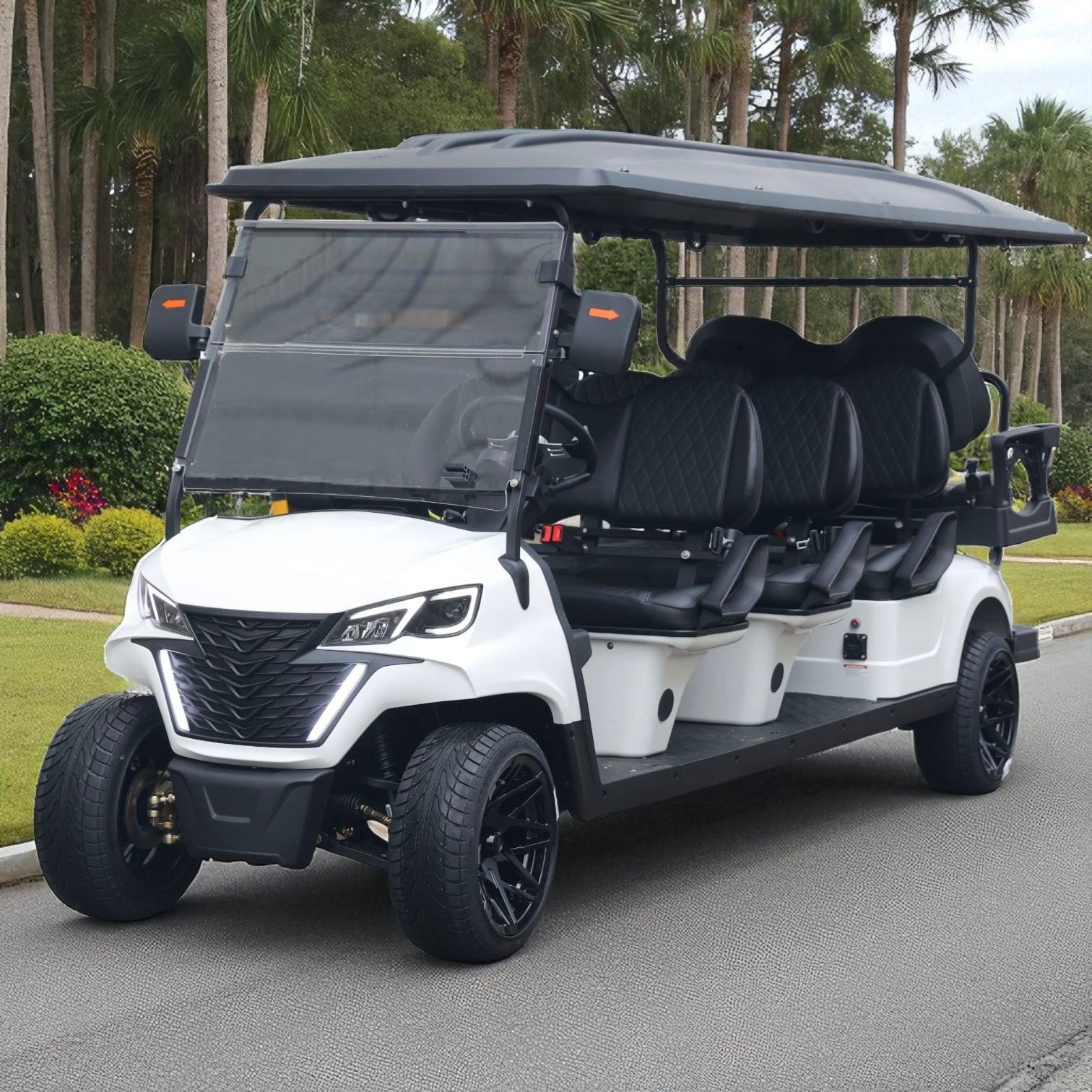
The direct answer is this: knowing golf cart terms like PTV, LSV, and regenerative braking makes all the difference when picking the right cart for you.Â
Whether you want a simple ride around your neighborhood or something rugged for off-road fun, understanding these words helps you choose wisely. Golf carts come with features that affect how they drive, how safe they are, and how much maintenance they need.
This guide breaks down those tricky terms into plain language, so you’re not guessing what you’re buying. Keep reading to get comfortable with the lingo and find the perfect cart for your needs.
Key Takeaways
-
PTV, LSV, and NEV are legal classifications that define a cart's speed and street-legal capabilities.
-
A cart's voltage system and motor type (AC or DC) directly impact its power, torque, and overall performance.
-
Features like lift kits and convertible seats offer practical customization for terrain and passenger needs.
What Does PTV Golf Cart Mean?
You’ll often come across the acronym PTV when looking at golf carts. PTV stands for Personal Transport Vehicle. It’s a broad term that covers what most people simply call a golf cart.
Basically, a PTV is a small, four-wheeled electric vehicle made for slow, easy travel. These vehicles aren’t built for highways or fast driving. Instead, they’re designed for getting around neighborhoods, large properties, or golf courses comfortably and safely.
Calling something a PTV helps separate it from regular cars. It’s a way to say, This vehicle is meant for short trips at low speeds.
That’s important because it means different rules apply, and the vehicle’s features are tailored for these uses. Think of PTV as the official category name for these kinds of carts. Under this umbrella, you’ll find more specific types like LSV (Low-Speed Vehicle) and NEV (Neighborhood Electric Vehicle), which we’ll explain next.
Knowing that PTV is the general term helps you understand the labels and descriptions you’ll see when shopping. It’s the first piece of the puzzle in figuring out what kind of golf cart fits your needs. Once you get this, the rest starts to make more sense.
The Difference Between LSV and NEV

Under the PTV umbrella, you will find two important legal classifications: LSV and NEV. These terms are about street legality.
An LSV, or Low-Speed Vehicle, is a golf cart built to meet specific federal safety standards. This allows it to be driven on certain public roads with speed limits typically up to 35 mph. To be classified as an LSV, a vehicle must have features like:
-
Headlights, taillights, and brake lights
-
Turn signals
-
A Vehicle Identification Number (VIN)
-
Seat belts for all passengers
-
A parking brake
An NEV, or Neighborhood Electric Vehicle, is essentially a type of LSV. The terms are often used interchangeably. Yet, NEV sometimes specifically refers to a battery-electric LSV designed for short trips within a community.
All our street-legal carts at Backyard Escapism are built as LSVs, meaning they come with all the required safety features and a 17-digit VIN, making them ready for approved road use right from the start.
What Is a Forward Facing Golf Cart?
Traditional golf carts usually have a rear seat where passengers sit facing backward. A forward-facing golf cart, just as the name says, has all seats facing forward,including the back seat.
This might seem like a small change, but it actually makes a big difference in how the cart feels to ride in.
One clear advantage is that passengers in the back can see where they’re going. This makes the ride more enjoyable and can help prevent motion sickness, which sometimes happens when you’re looking backward.
It also makes talking easier. When everyone faces forward, conversations flow more naturally because no one has to twist around to see each other.
There’s a practical side, too. Forward-facing seats often help spread the weight more evenly across the cart. This balance means the cart stays steadier and rides smoother, especially when it’s full of people. When weight is uneven, the cart can feel wobbly or less controlled. So, this design isn’t just about comfort, it’s about safety and stability, too.
If you want a comfortable everyday setup with room for friends or family, you can explore options like 4-seater golf carts that feature this forward-facing layout.
This balance means the cart stays steadier and rides smoother, especially when it’s full of people. When weight is uneven, the cart can feel wobbly or less controlled. So, this design isn’t just about comfort,it’s about safety and stability, too.
In short, forward-facing golf carts offer a better view, more comfort, and a safer ride, making them a smart choice for everyday use.
Understanding Golf Cart Voltage Systems
The voltage of a golf cart is a fundamental aspect of its power system. Common systems are 36 volts, 48 volts, and 72 volts. This voltage is created by connecting several batteries together in a series. Think of voltage like water pressure in a hose. Higher voltage means more potential power available to the motor.
A 48-volt system is the modern standard for most new electric golf carts. It provides an excellent balance of power, efficiency, and range.
A 72-volt system offers even more power and torque, which is beneficial for tackling steep hills or carrying heavier loads. The voltage system is a key factor in the cart's performance, especially when comparing it with new carts such as the latest options showcased in new golf carts.
For anyone prioritizing maximum strength and hill-climbing ability, checking out 72-volt golf carts can give you a clearer sense of how much performance upgrade you’ll actually get.
The voltage system is a key factor in the cart's performance, especially when comparing it with new carts such as the latest options showcased in new golf carts.
Given that the global market for electric golf carts was estimated at USD 1.55 billion in 2024 and is projected to reach USD 2.58 billion by 2033Â [1], paying attention to performance specs like voltage becomes more important as more buyers opt for electric carts.
Defining Golf Cart Regenerative Braking
Regenerative braking is a smart feature you’ll find on many electric golf carts, and it helps stretch out the life of your battery.
Here’s the simple version of how it works. When you take your foot off the gas pedal or press the brake lightly, the electric motor switches roles for a moment. Instead of using power to move the cart forward, it starts working like a generator.
What does that mean? Well, the cart’s momentum,the energy it has from moving,gets turned back into electricity.
This electricity doesn’t just disappear; it flows back into the battery, giving it a small recharge. So, while you’re slowing down, the cart is actually saving energy instead of wasting it.
This process also helps slow the cart down gently, which means the mechanical brakes don’t have to do all the work. That’s good because it reduces wear and tear on the brake parts, saving you money and hassle in the long run.
Regenerative braking is a clever way to make your golf cart more efficient, letting you drive longer between charges without extra effort. It’s a neat trick that turns slowing down into a way to keep going.
What Is a Convertible Rear Seat?
A convertible rear seat is a rear bench that can switch between carrying people and carrying cargo. Instead of being locked into one purpose, it’s built to change with what you need that day.
Most setups work like this:
- The seat bottom flips up
- The seatback folds down
- Together they form a flat, sturdy platform
That flat area becomes a small cargo bed on the back of your cart.
How It Helps in Everyday Use
This kind of seat is especially useful when your plans are not always the same. One day you’re giving rides, another day you’re hauling gear.
Common uses include carrying:
- Groceries
- Coolers
- Sports equipment or camping gear
You don’t have to choose between extra passengers or extra space. You can change it on the spot, usually in just a few seconds.
Adding a Convertible Rear Seat to Your Cart
You’re not stuck with whatever the cart came with from the factory. Many aftermarket kits let you add a convertible rear seat to different cart brands and models.
These kits are popular with people who:
- Use their cart around the neighborhood
- Drive on large properties or farms
- Split use between social rides and utility work
It’s a simple upgrade, but it makes the cart feel more like a small, flexible utility vehicle and less like just a people mover.
Explaining Golf Cart Lift Kit Sizes

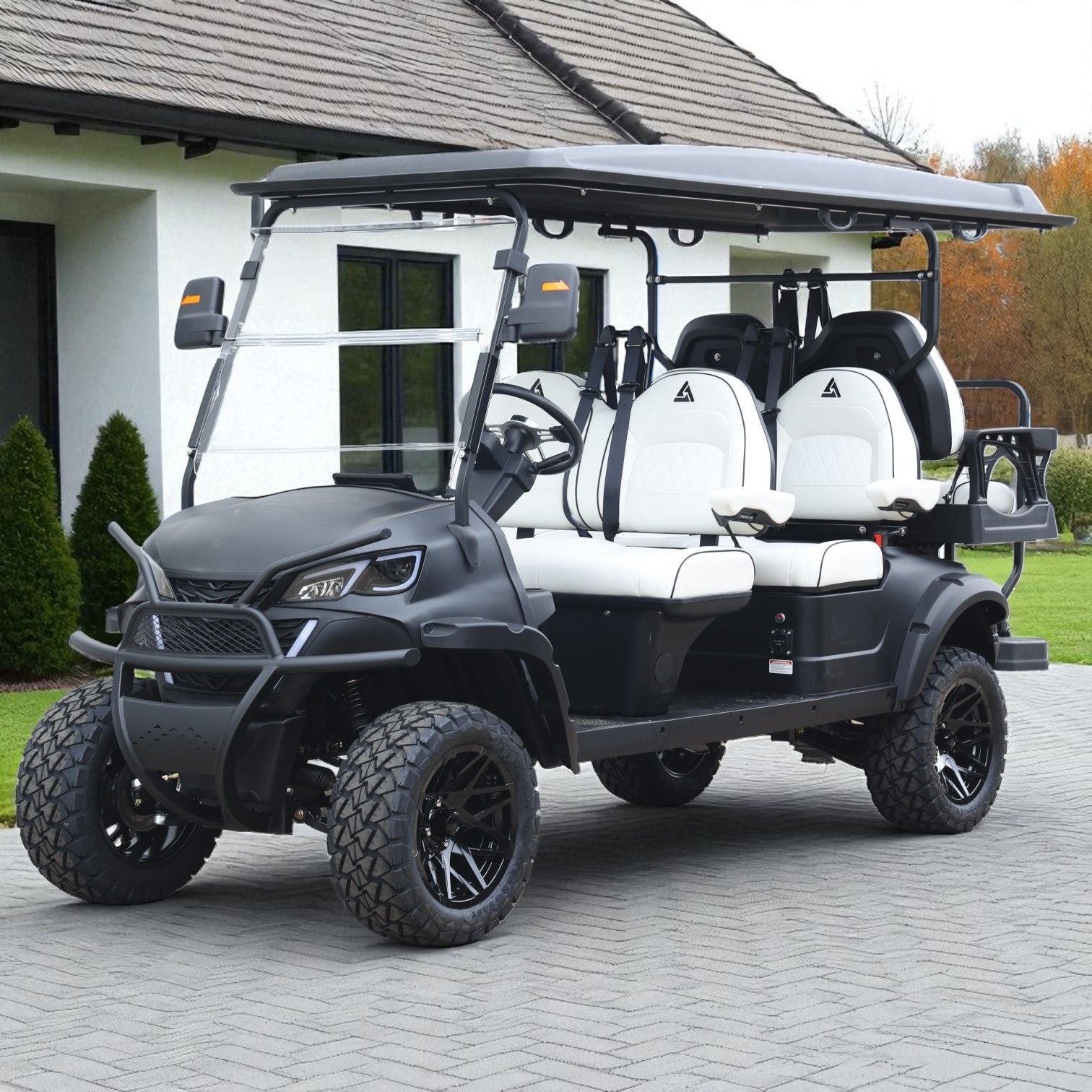
A lift kit is an upgrade that raises your golf cart’s body and frame higher off the ground. The main reason people add a lift kit is to fit bigger tires.
Bigger tires mean more ground clearance, which helps when you’re driving over rough or uneven terrain. Without enough clearance, the bottom of your cart can scrape rocks, roots, or bumps, which isn’t good for the cart or your ride.
Lift kits come in different sizes, usually measured in inches. You might see 3-inch, 5-inch, or even 6-inch lifts. The number tells you how much higher the cart will sit after the kit is installed.
The bigger the lift, the bigger the tires you can put on. Larger tires are great if you want to take your cart off-road or through tougher paths where a normal golf cart would struggle.
But it’s not just about size. Choosing the right lift kit depends on how you plan to use your cart. If you only drive on smooth paths, a small lift might be enough. For rough trails, a bigger lift and bigger tires make sense. And with electric models making up about 63% of global cart demand [2], many owners now modify their carts with lift kits to maximize utility, traction, and terrain versatility. Matching the lift kit to your driving style keeps your cart safe and running well, so you get the best performance without risking damage or accidents.
If off-road capability is your priority, browsing lifted golf carts can help you understand how different lift heights translate to real-world terrain handling.
And with electric models making up about 63% of global cart demand [2], many owners now modify their carts with lift kits to maximize utility, traction, and terrain versatility. Matching the lift kit to your driving style keeps your cart safe and running well, so you get the best performance without risking damage or accidents.
FAQ
What should beginners know when choosing between an electric golf cart and a gas golf cart?
Choosing between an electric golf cart and a gas golf cart often comes down to noise levels, golf cart efficiency, and how far you plan to travel. Electric golf cart range depends on golf cart batteries, golf cart battery voltage, and whether you use lithium golf cart batteries or lead acid golf cart batteries. Gas carts offer steady power but need more golf cart maintenance.
How can I improve comfort and safety while learning basic golf cart terminology?
You can add practical golf cart accessories like golf cart seats, golf cart forward facing seats, a convertible golf cart rear seat, golf cart seat covers, and golf cart floor mats. Many beginners also choose a golf cart canopy, golf cart windshield, golf cart LED lights, golf cart light kits, and golf cart safety features, especially when driving a street legal golf cart or a low speed vehicle (LSV).
What performance terms should new drivers understand before upgrading a cart?
New drivers should learn how a golf cart motor, golf cart controller, golf cart motor controller, and golf cart speed controller shape golf cart performance. Understanding golf cart motor types, AC vs DC golf cart motor setups, golf cart speed, golf cart motor torque, golf cart electric drive, and golf cart regenerative braking helps you choose golf cart upgrade kits with more confidence.
What should beginners check when learning about golf cart handling and ride quality?
A smooth ride depends on golf cart suspension, golf cart steering, golf cart brakes, golf cart tires, and golf cart tires sizes. If you drive a golf cart for off-road paths, you may need a golf cart lift kit and different golf cart lift sizes. Even small things like golf cart tire pressure and golf cart silencers change how the cart feels and responds.
What are the basic ownership terms every beginner should learn before buying or renting?
Beginners should understand golf cart storage, golf cart storage solutions, golf cart charging station needs, golf cart charger types, golf cart charging time, and when golf cart battery replacement becomes necessary. You may also hear terms like golf cart insurance, golf cart warranty, golf cart resale value, golf cart rental, golf cart dealer near me, golf cart cargo box, golf cart weather enclosure, and golf cart GPS tracker.
Your Next Step with Golf Carts
Choosing the right lift kit can transform how your golf cart handles the outdoors, giving you the clearance and stability needed for your adventures. Whether you’re cruising smooth neighborhood streets or tackling rougher trails, matching your lift and tires to your driving style keeps your ride safe and comfortable. It’s about more than just height,it’s about making your cart work for you.
If you’re ready to upgrade your outdoor experience with a luxury golf cart tailored to your needs, Backyard Escapism offers a curated collection of custom electric carts. From sleek 4-seaters to spacious 8-seaters, all with lithium batteries and premium finishes, they help you find your happy place out back. Explore their range and start building your perfect ride today at Backyard Escapism.
References
1. https://www.grandviewresearch.com/industry-analysis/electric-golf-cart-market-report
2. https://www.businessresearchinsights.com/market-reports/golf-carts-market-120759
Related Articles
-
https://backyardescapism.com/blogs/the-escapist/new-golf-carts/
-
https://backyardescapism.com/blogs/the-escapist/what-does-ptv-golf-cart-mean
-
https://backyardescapism.com/blogs/the-escapist/difference-between-lsv-and-nev
-
https://backyardescapism.com/blogs/the-escapist/what-is-a-forward-facing-golf-cart/
-
https://backyardescapism.com/blogs/the-escapist/understanding-golf-cart-voltage-systems
-
https://backyardescapism.com/blogs/the-escapist/what-is-a-golf-cart-controller/
-
https://backyardescapism.com/blogs/the-escapist/defining-golf-cart-regenerative-braking/
-
https://backyardescapism.com/blogs/the-escapist/what-is-an-ac-drive-golf-cart/
-
https://backyardescapism.com/blogs/the-escapist/golf-cart-terms-for-new-owners/
-
https://backyardescapism.com/blogs/the-escapist/what-is-a-convertible-rear-seat/
-
https://backyardescapism.com/blogs/the-escapist/explaining-golf-cart-lift-kit-sizes/